
Last Updated: October 26, 2026
Quick Summary
To mix and match wardrobe basics, build around a small palette of two or three neutrals plus one or two accents, then pair one fitted piece with one loose piece every time. Repeat the same silhouettes in different colors and check that each new piece pairs with at least three things you already own.
- Sort your closet into keep, repair, and donate piles before buying anything new.
- Keep 70-80% of your wardrobe neutral to make mix and match easy.
- A capsule of roughly 10 to 12 foundation pieces should generate dozens of outfits.
- Map tops against bottoms in a pairing matrix to find 20 to 30 real outfits.
- Loose plus loose needs a belt, half-tuck, or cropped layer to define the waist.
Table of Contents
- How to Mix and Match Wardrobe Basics in 7 Steps
- How to Choose a Wardrobe Color Palette That Actually Works
- Your Capsule Wardrobe Checklist for Versatile Pieces
- How to Create More Outfits with Fewer Clothes Using a Pairing Matrix
- Frequently Asked Questions
How to Mix and Match Wardrobe Basics in 7 Steps
Learning how to mix and match wardrobe basics starts with a simple shift: stop buying outfits and start buying pieces that talk to each other. At Nova Rue Boutique, we build our collections around that idea, so a single top can carry a whole week of looks.
- Audit what you own. Sort everything into keep, repair, and donate piles.
- Pick a base palette. Choose two neutrals you love, such as cream and navy.
- Set a formula. Pair one fitted piece with one loose piece every time.
- Repeat shapes. Buy the same silhouette in different colors.
- Test three ways. Before buying, name three outfits it completes.
- Layer smart. Add a cardigan or jacket to stretch each look.
- Rotate weekly. Plan outfits on Sunday to avoid decision fatigue.
How to Choose a Wardrobe Color Palette That Actually Works
A wardrobe color palette is a small set of coordinating colors, usually two or three neutrals plus one or two accents. Start with what you already wear most.
- Choose two neutrals: cream, navy, gray, black, or camel.
- Add one accent: soft pink, olive, or rust.
- Check the light: hold fabrics near a window before committing.
- Keep 70-80% neutral: this is what makes mix and match easy.
Once your palette is set, every new piece should pair with at least three things you own. If it doesn't, skip it. To see how a cohesive palette translates into finished looks, browse our affordable feminine dresses and notice how the colors repeat across styles.
Your Capsule Wardrobe Checklist for Versatile Pieces
A capsule wardrobe checklist is a short list of garments that cover most days without overlap. Ours focuses on pieces that dress up or dress down with one swap, but only if it's tuned to your actual life.
The core checklist
- Two knit tops in neutral shades
- One pair of wide-leg jeans
- One pair of black trousers
- One layering cardigan
- One simple dress
- One light jacket or blazer
- One pair of flats and one pair of heels
That's roughly 10 to 12 foundation pieces that should generate dozens of outfits. Add seasonal items only when a gap appears.
Audit before you buy
Before adding a single item, pull everything you own and sort it into keep, repair, and donate piles. Then ask of each keep piece: does it pair with at least three other things I'm keeping? If not, donate it. This often reveals you already own most of the checklist, the real gap is one specific piece, not a whole new wardrobe.
Adapt the list to your lifestyle and dress code
The core list assumes a mix of casual and smart-casual days. Adjust it:
- Office-heavy week: swap the wide-leg jeans for a second pair of trousers in a different neutral, and add a blazer if you don't already have one.
- Casual or remote week: keep the jeans and cardigan, and add a second casual bottom (straight-leg jeans or a midi skirt) instead of the heels.
- Travel: choose pieces that work in at least three outfits each and pack in one color family.
- Cold climate: add a heavier outer layer (a wool coat or a quilted jacket) and a long-sleeve base layer.
- Warm climate: replace the blazer with a lightweight overshirt or linen jacket, and choose breathable knits over heavy ones.
Check fabric and care before you commit
Versatility isn't only about color and shape, it's about how a piece holds up. Look for fabrics that resist pilling and hold their shape, and check the care label: hand-wash-only pieces are less likely to survive a busy week. Cost per wear is a useful filter, a $120 blazer worn twice a week for a year costs less per wear than a $40 top worn three times.
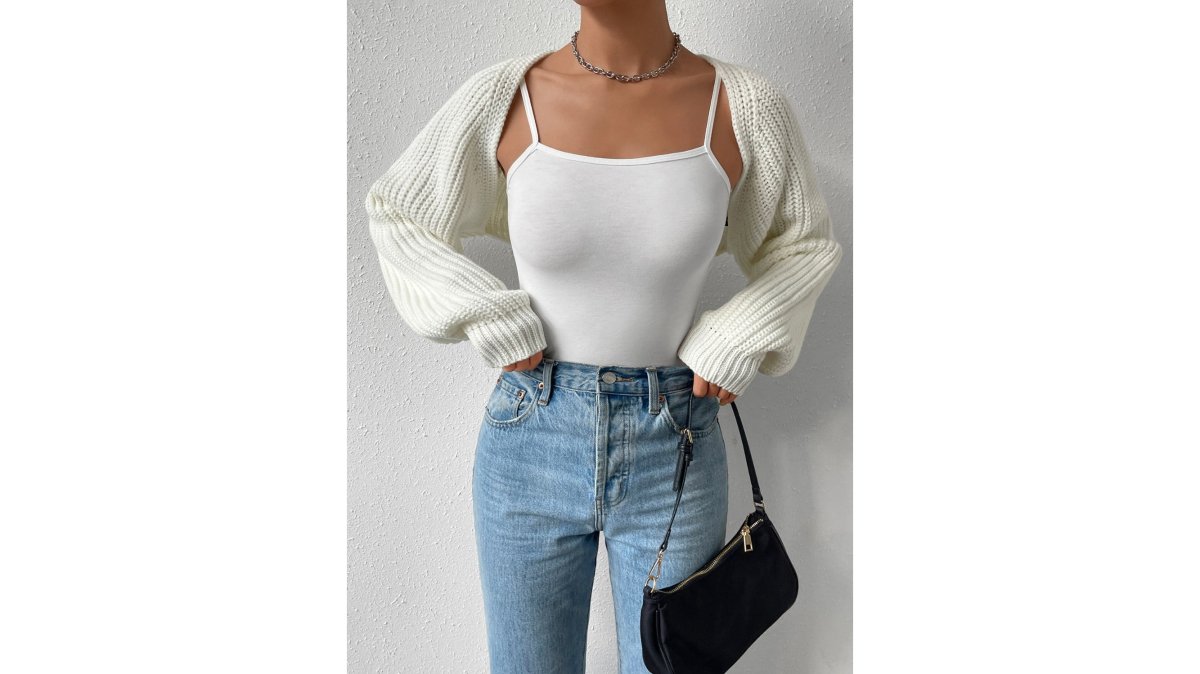
For a soft layer that works over dresses and knits alike, our cropped cardigan fits neatly into this list.
Ribbed Round Neck Long Sleeve Knit Top →

How to Create More Outfits with Fewer Clothes Using a Pairing Matrix
A pairing matrix is a simple grid that maps your tops against your bottoms so you can see every combination at once. It turns a closet into a system instead of a pile of maybes.
Start with your actual garments, not categories.
| Top | Wide-Leg Jeans | Black Trousers | Midi Skirt |
|---|---|---|---|
| Ribbed knit top | Saturday errands | Client meeting with blazer | Brunch |
| Round-neck knit | School pickup | Internal team meeting | Dinner with friends |
| Cropped cardigan | Weekend coffee | Layered office day | Evening event |
| Silk shell | , | Presentation day | Wedding guest |
Once the grid is filled, count the cells you'd actually wear. Most people find 20 to 30 real outfits hiding in a small closet, and a handful of pieces that never appear in a single cell. Retire those first.
Add layers and shoes as multipliers
The grid only covers tops and bottoms. Each layer multiplies the grid, and each shoe changes a row's formality. Take one column (say, black trousers) and list every layer that works over each top: a blazer pushes a knit top toward office; a cropped cardigan pulls it back to weekend. Then assign one shoe per outfit: flats for daytime, heels or loafers for evening. That single column can produce eight to ten distinct looks from four tops, one bottom, two layers, and two pairs of shoes.
Use fit and proportion to decide which cells work
Color coordination is only half the job, a pairing that looks right on paper can fail if the shapes fight each other. Three rules cover most cases:
- Fitted top + wide or loose bottom. A ribbed knit with wide-leg jeans or a midi skirt balances proportions and keeps the waist visible.
- Loose top + slim bottom. An oversized sweater or silk shell works best with straight-leg trousers or a pencil skirt, so the volume has somewhere to go.
- Loose + loose needs a third piece. Pair an oversized shirt with wide-leg trousers only with a belt, a half-tuck, or a cropped layer to define the waist, otherwise the outfit swallows your shape.
A quick test: check where the horizontal lines fall in a mirror. A hem that hits at the widest part of the hip or thigh makes that area look wider; a hem above or below it reads cleaner. This is why the same top can work with one bottom and not another even when the colors match.
Keep the matrix alive
A matrix is only useful if it stays current. Review it each season: cross out pieces you've stopped wearing, add new ones, and re-check the blank cells. If a piece hasn't appeared in a single cell for two seasons, donate or sell it. That habit keeps the grid honest and stops the closet from quietly refilling with pieces that don't talk to each other.
To start building, try our ribbed knit top and wide-leg jeans as your first two rows, then add the cropped cardigan as your first layer column.


Frequently Asked Questions
How many pieces do you need for a mix and match wardrobe?
Most people can build a workable mix and match wardrobe with roughly 30 to 40 pieces, including tops, bottoms, dresses, and outerwear. The exact number matters less than the ratio: keep about 70 to 80 percent of your pieces in neutral colors and the rest in accent shades. A smaller set of versatile pieces you actually wear beats a packed closet where half the items only work with one outfit.
What wardrobe basics are easiest to mix and match?
Solid knit tops, high-waist wide-leg jeans, and a cropped cardigan are among the easiest basics to pair. They work across dress codes and layer well together. For example, the Ribbed Round Neck Long Sleeve Knit Top ($24.00) pairs with the High Waist Wide Leg Jeans ($35.00) for daytime, then layers under the Honey Open Front Cropped Cardigan ($31.16) for a more polished look. Sticking to solid colors and simple silhouettes gives each piece more pairing options.
How do you choose colors that work together in a wardrobe?
Start with two or three neutral anchors like black, cream, or camel, then add one or two accent colors you love wearing. Test each new piece against at least three items you already own before buying. If it does not pair with three existing pieces, it will likely sit unworn. This approach keeps your palette cohesive and makes getting dressed faster each morning.
Ready to stop guessing in front of your closet? Nova Rue Boutique curates feminine, effortless pieces designed to work together, with free US shipping on orders over $50. Check out our collection and build a wardrobe where everything pairs.
